
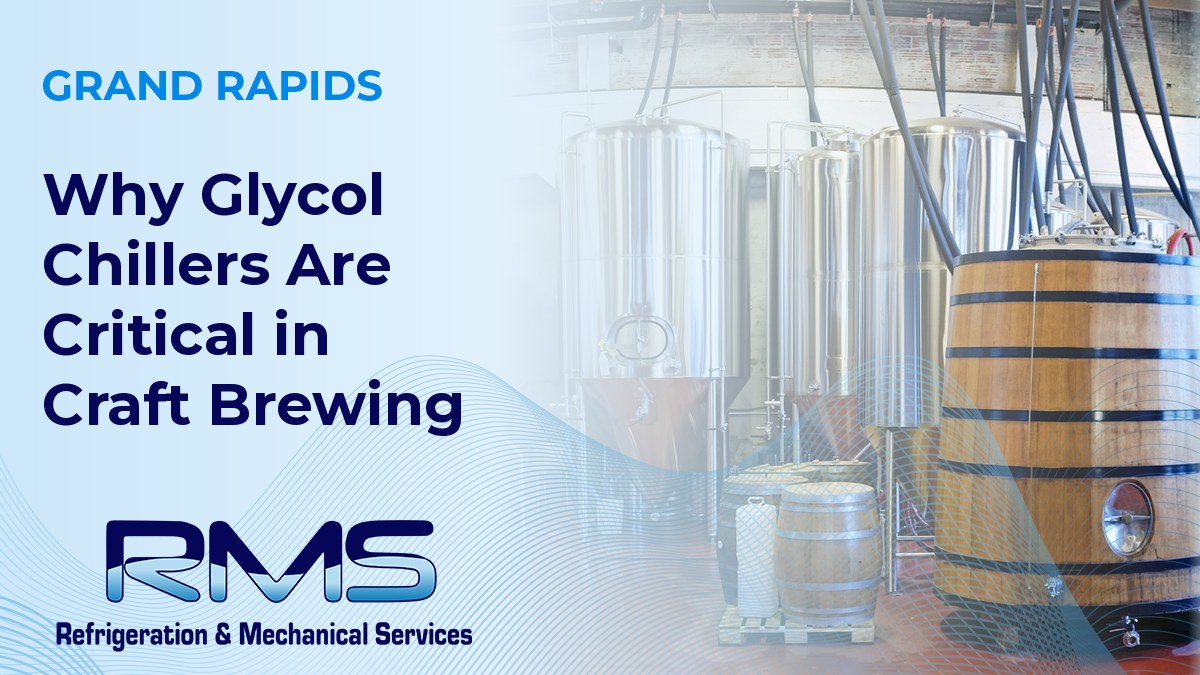
Why Glycol Chillers Are Critical in Craft Brewing Operations
In most craft breweries, the glycol chiller controls the temperature of every fermenter and brite tank. Fermentation gives off heat, and the chiller removes it. If the chiller falls behind or stops, temperatures climb and the beer changes.
For breweries in Grand Rapids and across West Michigan, a reliable glycol system is part of producing a consistent product.
What Does a Glycol Chiller Do in a Brewery?
A glycol chiller cools a mix of food-grade propylene glycol and water below freezing. A pump sends the cold mix through jackets on each tank. A controller on each tank opens a valve when the tank needs cooling, so every tank can hold its own setpoint.
Glycol is used because the mix stays liquid below the freezing point of water. That lets the system crash cool beer close to freezing without ice forming in the lines.
Fermentation Control
Yeast produces heat as it ferments. Without cooling, a tank can rise well above the temperature the recipe calls for. Higher temperatures can produce off flavors and change how the yeast finishes. Lagers ferment colder than ales and need even closer control.
Crash Cooling and Brite Tanks
After fermentation, brewers drop the beer temperature quickly to settle yeast and prepare for conditioning or packaging. On systems that do not cool wort with glycol, crash cooling is often the largest load on the chiller. If several tanks crash at once, a small chiller cannot keep every tank on schedule.
Sizing a Glycol Chiller for Growth
Chiller sizing depends on:
- Number and volume of fermenters and brite tanks
- Fermentation schedule and how many tanks are active at once
- Crash cooling targets and timing
- Wort cooling, if the chiller supports it
- Cold room or cellar loads on the same loop
- Planned expansion over the next few years
Many breweries outgrow their first chiller when they add tanks. Planning capacity, piping and pump size for growth costs less than replacing the system later.
Common Glycol System Problems
- Glycol mix too weak, which raises the freeze point
- Dirty condenser coils that cut capacity on hot days
- Failed tank valves or controllers
- Air in the lines or low glycol level
- Uninsulated or poorly insulated supply and return lines
- One chiller with no backup for critical tanks
Maintenance That Prevents Lost Batches
- Test glycol concentration and top off the mix
- Clean condenser coils, especially before summer
- Check refrigerant pressures and compressor operation
- Inspect pumps, valves and tank controllers
- Check line insulation for damage and condensation
- Test temperature alarms
Brewery chillers share the same basics as larger systems. Read how industrial chillers work and why they fail and what impacts industrial chiller installation costs if you are planning an upgrade.
Size for Today's Cellar and the Tanks You Plan to Add
A glycol chiller protects every batch in the cellar. Size it for the way you brew today and the tanks you plan to add, and keep it on a regular maintenance schedule. See our brewing, winemaking and distilling services for the systems we install.
For breweries, wineries and distilleries in West Michigan, contact RMS Pros to review your glycol system or plan for expansion.


