
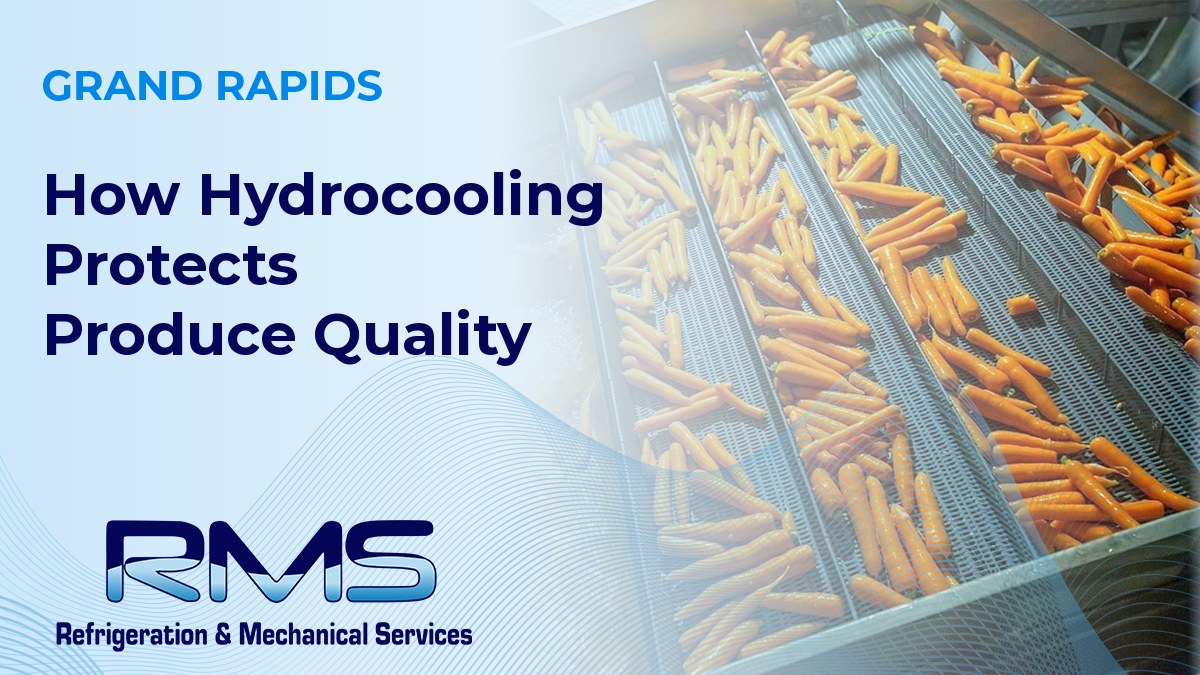
How Hydrocooling Systems Protect Produce Quality
Hydrocooling uses cold water to remove field heat from produce right after harvest. Water carries heat away from the product surface much faster than air, so produce reaches its storage temperature sooner and keeps more of its quality.
For Michigan growers of cherries, sweet corn and asparagus, the first hours after harvest have a large effect on shelf life.
How Does Hydrocooling Work?
Produce passes under a shower of chilled water or through a tank of it. A refrigeration system keeps the water near freezing as it absorbs heat from the product. Cooling continues until the produce core, not only the surface, is close to the target temperature.
Why Fast Cooling Protects Quality
Produce keeps respiring after harvest, and respiration speeds up at higher temperatures. Warm produce uses up its stored sugars and water faster, softens sooner and is more open to decay. Removing field heat quickly slows all of that down.
Hydrocooling also does not dry the product. Water cooling adds surface moisture instead of removing it, which helps crops that wilt or shrivel easily.
Which Crops Suit Hydrocooling?
Hydrocooling works best for produce that tolerates getting wet. Common examples include:
- Sweet and tart cherries
- Sweet corn
- Asparagus
- Many tree fruits and vegetables that tolerate wetting
Some crops do not handle water well. For those, forced-air cooling or another precooling method is a better fit.
Shower and Immersion Designs
- Shower hydrocoolers spray chilled water over bins or cartons on a conveyor or in batches.
- Immersion hydrocoolers move produce through a tank of chilled water.
The right design depends on the crop, the container, the volume per hour and the space available in the packing line.
Water Sanitation and Food Safety
Recirculated water can spread decay organisms from one load to the next. A hydrocooler needs a sanitation plan: a sanitizer at a controlled level, regular checks of the water, and a schedule to drain and clean the system. Your food safety program sets the specific requirements.
What to Check Before Harvest
- Refrigeration capacity matches peak harvest volume
- Water reaches and holds its target temperature under full load
- Pumps, nozzles and pans are clean and deliver even flow
- Sanitizer equipment and test kits are working
- Controls and alarms are tested
- Cooled product has a cold room ready so it does not rewarm
Hydrocooling is only the first step. Product needs a storage room designed to hold it, as covered in refrigeration design for produce storage facilities and why humidity control is critical in produce storage.
What a Hydrocooler Needs to Protect Quality
A hydrocooler protects quality only when it has enough capacity for peak harvest, clean water and a cold room to receive the product. Learn more about the hydrocooling systems we design and install.
If you grow or pack produce in West Michigan, contact RMS Pros to plan or service a hydrocooling system before harvest.


